
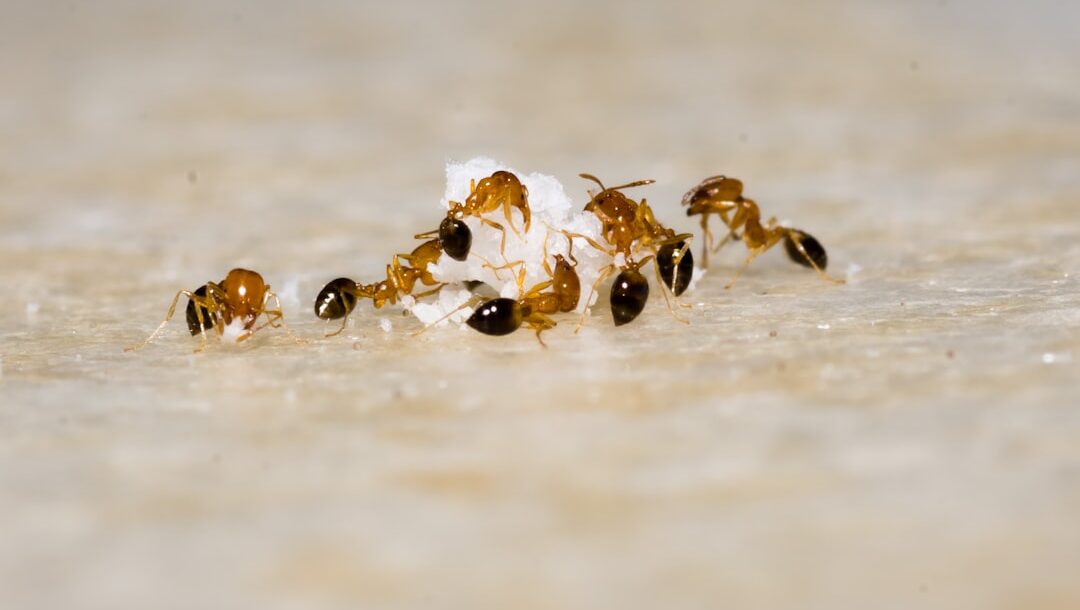
You wipe down the counter. You spray the trail. You kill every ant you can see. And the next morning, they’re back. Same spot. Same line. Same frustration.
If that sounds familiar, you’re dealing with one of the most common pest problems in Kansas, and one of the most misunderstood. Ants aren’t random visitors. They’re organized, persistent, and the ones you see on your kitchen counter are only a tiny fraction of the colony causing the problem.
Understanding how ant colonies actually work, and which species you’re dealing with, is the difference between chasing the problem all summer and solving it for good.
The 4 Most Common Ant Species in Kansas Homes
According to local entomologists and pest professionals, four ant species cause the majority of residential infestations across the Kansas City, Topeka, and Lawrence areas. Each one behaves differently and requires a different approach to control.
Carpenter Ants. The largest ants you’ll find indoors in Kansas and Missouri are typically black with some reddish or yellowish markings. They don’t eat wood but tunnel through it to build nests, leaving behind fine sawdust-like material called frass. They prefer soft, water-damaged wood near leaky windows, bathroom walls, and deck supports. Left untreated, they can cause real structural damage over time.
Odorous House Ants. The most frequent nuisance ant in Kansas and Missouri homes. Small, dark brown to black, and they travel in long visible trails along countertops and baseboards. Crush one and it releases a distinct rotten coconut smell. These ants form large colonies with multiple queens, which means killing one queen doesn’t collapse the colony. Spraying their trails can actually cause the colony to split and spread.
Pavement Ants. The ones building small dirt mounds in the cracks of your driveway and sidewalk. Typically stay outdoors but will move inside when heavy rain floods their nests or outdoor food runs low. Inside, they forage for sweets and greasy foods along kitchen floors and near pet food bowls. Their nests are often located beneath concrete, making elimination difficult without professional help.
Acrobat Ants. Named for their ability to raise their heart-shaped abdomens over their heads when disturbed. Small, black to yellowish, and they release a foul odor when bothered. They typically nest outdoors in decaying wood but enter homes through gaps around utility lines and window frames. If you’re seeing them near electrical outlets or switch plates, they may have established a nest inside the wall.
Why Killing Visible Ants Doesn’t Solve the Problem
This is where most homeowners get stuck. You see ants, you kill ants, and you assume the problem is handled. But the ants you see are worker ants, and they represent a small percentage of the total colony.
A single odorous house ant colony can contain tens of thousands of workers and multiple queens. Carpenter ant colonies can house thousands of individuals split between a main colony and satellite nests. Pavement ant colonies nest underground where you can’t reach them.
When you spray a trail of ants with a store-bought insecticide, you kill the workers on the surface. The colony detects the threat and responds. Some species, like odorous house ants, will bud, splitting the colony into multiple new groups that scatter to different parts of your home. You started with one colony and now you have three.
Over-the-counter sprays also create a chemical barrier that repels ants from that specific trail, but they don’t eliminate the colony. The ants simply find a new route. That’s why you spray by the kitchen window on Monday and find ants coming through the bathroom baseboard on Wednesday.
Effective ant control requires identifying the species, locating the colony or colonies, and using the right approach to eliminate the source. For most species, that means targeted bait systems that workers carry back to the colony, which reaches the queens and the brood. Spraying disrupts that process.
What You Can Do at Home
There are several steps you can take to reduce ant activity and make your home less attractive to foraging workers.
Clean up food sources immediately. Wipe down counters, sweep floors, and don’t leave dirty dishes in the sink overnight. Store pantry items, pet food, and sugar-based products in sealed containers.
Eliminate moisture. Fix leaky faucets, dry out under-sink areas, and make sure bathrooms and basements are properly ventilated. Moisture draws ants indoors just as much as food does.
Seal entry points. Caulk gaps around windows, doors, and where utility lines enter the home. Pay special attention to ground-level openings along the foundation.
Move outdoor attractants away from the house. Firewood, landscape timbers, and mulch piled against the foundation invite carpenter ants and other species to nest close to your home.
Avoid spraying visible ant trails with repellent insecticides. This may feel satisfying, but it often scatters the colony and makes the problem harder to control.
When to Call Green Pest Solutions
If ants keep coming back despite your best efforts, or if you suspect carpenter ant activity, it’s time for professional help. The National Pest Management Association (NPMA) recommends working with a qualified pest control professional who can identify vulnerabilities and implement a customized prevention plan for your home.
Green Pest Solutions creates personalized ant management plans designed to eliminate the colony, not just the workers you can see. We start with a thorough inspection to identify the species, locate nesting sites, and determine how ants are entering your home. From there, we build a targeted plan using the right approach for the specific species causing the problem.
Our Pest-Free, Worry-Free Guarantee means we’ll come back, even outside of normally scheduled visits, at no cost to you until the problem is resolved. If ants keep showing up, so do we.Stop chasing the same ants every morning. Call Green Pest Solutions today at 785-596-0446 (Topeka), 913-407-1600 (Lenexa), or request your free estimate online.
