
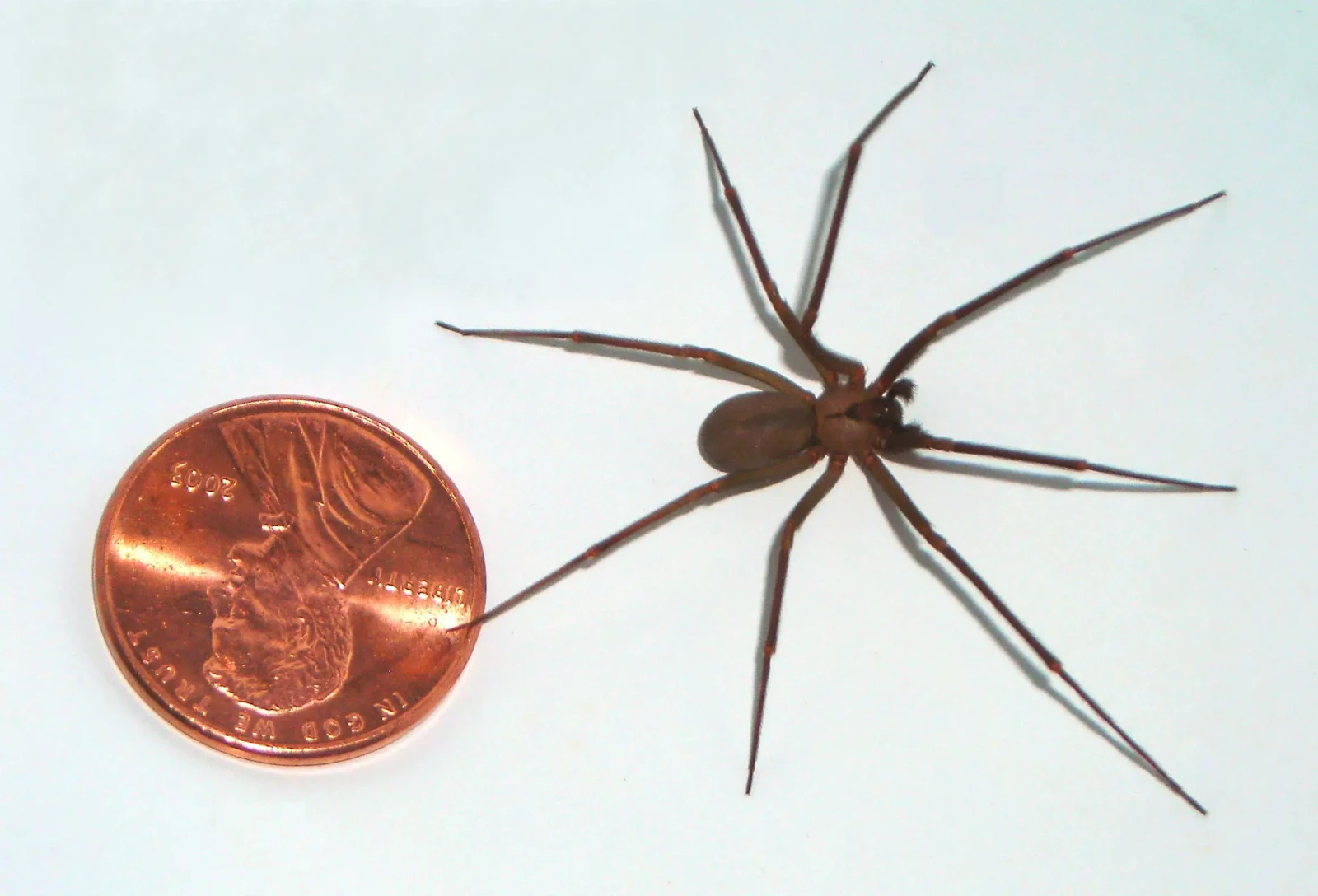
If you live in Lenexa or anywhere in the Kansas City metro, brown recluse spiders aren’t just a possibility; they’re a near certainty. The KC area sits in one of the densest brown recluse zones in North America, and summer is when these spiders are at their most active inside homes.
Most homeowners don’t know much about brown recluses beyond the name and the reputation. But understanding what they actually look like, where they hide, and when to be concerned can help you feel a lot more confident about sharing your space with the most common household spider in Kansas.
Lenexa Is Brown Recluse Country
This isn’t an exaggeration. One of the most cited brown recluse studies in entomology history took place right here in Lenexa.
In a study published in the Journal of Medical Entomology, researchers collected 2,055 brown recluse spiders from a single occupied home in Lenexa over a six-month period. The home, a 19th-century limestone house, had been lived in the entire time. Despite the extraordinary number of spiders, no one in the family was bitten. NPR covered the story, noting that the shy spider may not deserve its fearsome reputation.
That home was an extreme case, but it illustrates a bigger point: brown recluses are deeply established in the Lenexa and Kansas City area. According to Kansas State University Research and Extension, brown recluses are found in virtually every home in Kansas during the warmer months. Most homeowners just don’t know they’re there.
How to Identify a Brown Recluse
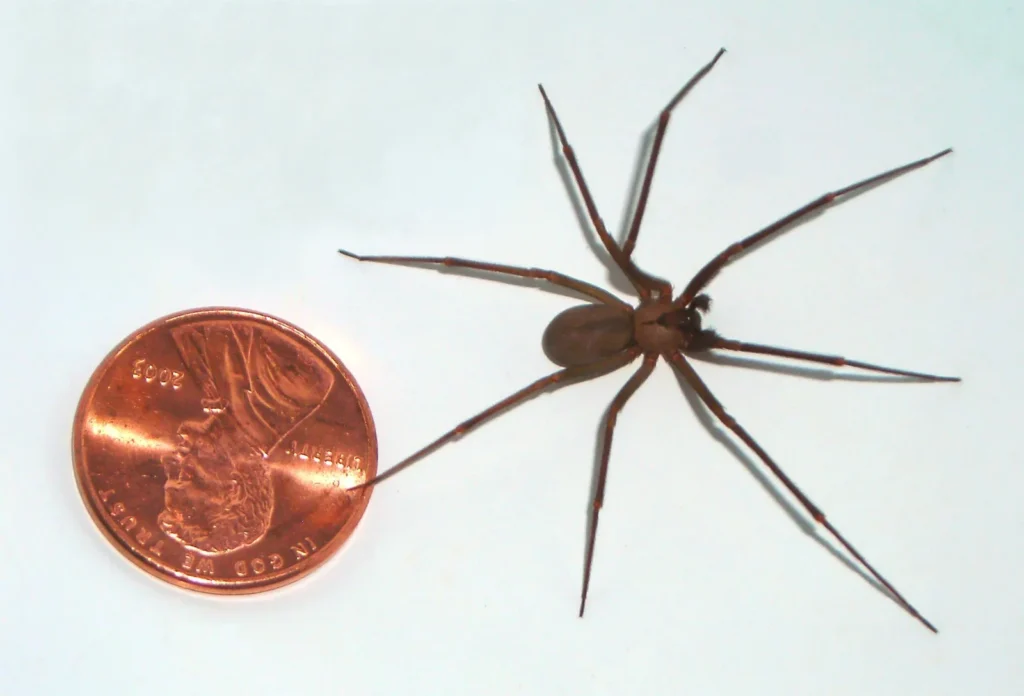
Brown recluses are one of the most misidentified spiders in the country. Plenty of brown spiders get blamed for being recluses when they’re actually harmless species like wolf spiders or common house spiders. Knowing the real identifying features helps you tell the difference.
The Violin Marking
The most well-known feature is a darker violin-shaped marking on the top of the spider’s body, with the “neck” of the violin pointing toward the abdomen. The marking can be faint on younger spiders and more pronounced on adults. Color ranges from light tan to dark brown and deepens with age.
Six Eyes Instead of Eight
Most spiders have eight eyes. Brown recluses have six, arranged in three pairs. You’d need to look closely (or use a magnifying glass), but this is one of the most reliable ways to confirm identification.
Size and Build
Brown recluses are smaller than most people expect, about the size of a quarter including their legs. They have long, thin legs with no visible spines or banding, and a smooth, uniform body. If the spider you’re looking at is large, hairy, or has patterned legs, it’s likely something else.
Movement
Brown recluses move with a smooth, consistent motion when retreating, different from the quick, jerky bursts of a wolf spider. If a spider darts out fast and aggressively when disturbed, it’s probably not a recluse.
Where They Hide in Your Home
True to their name, brown recluses prefer quiet, undisturbed areas. They’re nocturnal hunters that avoid well-lit, high-traffic spaces. In Lenexa homes, the most common hiding spots include:
Basements and Crawl Spaces
Dark, humid, and rarely disturbed, the ideal brown recluse habitat. They’ll tuck into corners, behind stored boxes, and along foundation walls.
Attics
Attic spaces with blown insulation are especially attractive. Brown recluses thrive in the warmth and seclusion, which is why homeowners often see more spiders inside living areas during summer, the attic gets too hot and drives them down into cooler rooms.
Closets and Storage Areas
Shoes, folded clothing, stacked boxes, and seasonal storage are all prime hiding spots. Recluses are commonly found in items that sit undisturbed for weeks or months.
Behind Furniture and Wall Art
The narrow gap between furniture and walls, or behind picture frames, provides the dark, tight spaces recluses prefer. Garages, utility rooms, and laundry areas are also frequent spots.
One Spider vs. a Population: How to Tell the Difference
A single brown recluse sighting in a Lenexa home isn’t unusual and doesn’t automatically mean you have an infestation. The real question is whether you’re dealing with a wanderer that came in from outside or a breeding population that’s established inside your home.
Signs that suggest a population rather than a one-off:
Multiple Sightings Across Rooms or Floors
One spider in the basement is a wanderer. Spiders appearing in the bedroom, bathroom, and kitchen suggest a population that’s spread through the home.
Shed Skins
Brown recluses molt as they grow, leaving behind papery, hollow spider-shaped skins. Finding these in corners, closets, or storage areas is a strong indicator of an established presence.
Egg Sacs
Off-white, roughly dime-sized egg sacs in undisturbed locations — behind boxes, in closet corners, under furniture — signal active reproduction.
Daytime Sightings
Brown recluses are nocturnal. Seeing them during the day can indicate the population is large enough to push activity outside their normal patterns.
If you’re noticing any of these signs, a professional inspection is the right next step. A trained technician can assess the scope of activity and recommend the right approach.
How to Reduce Brown Recluse Activity in Your Home
You can’t eliminate every brown recluse from a Kansas home — they’re too well established in the region. But you can significantly reduce the conditions that support them and minimize your encounters.
Reduce Clutter
This is the single most effective thing you can do. Cardboard boxes, stacked clothing, piled shoes, and general clutter create the dark, undisturbed hiding spots recluses need. Switch to sealed plastic bins for storage, keep floors and closets clear, and minimize the hiding places available.
Seal Entry Points
Caulk gaps around windows, doors, and where pipes and wiring enter the home. Check weather stripping on exterior doors and repair any cracks in the foundation. Recluses enter from outside and from adjoining spaces like attics and crawl spaces — sealing those pathways limits new spiders from moving in.
Pull Beds Away from Walls
A few inches of space between your bed and the wall reduces the chance of a recluse wandering onto bedding at night.
Shake Out Clothes and Shoes
Before putting on shoes, gloves, or clothing that’s been sitting in a closet or storage area, give them a shake. This simple habit significantly reduces the chance of an accidental encounter.
Use Sticky Traps for Monitoring
Placing sticky traps (glue boards) in corners, along baseboards, and behind furniture helps you monitor activity levels and identify problem areas. They won’t solve an infestation on their own, but they give you a clear picture of what’s happening and where.
Schedule Professional Treatment
For confirmed brown recluse activity, professional spider control is the most effective approach. A one-time treatment can knock down active populations, but because recluses are so well established in the Lenexa area, year-round protection through a program like Thrive Pest provides consistent, ongoing coverage. Quarterly or monthly treatments target the spiders and the insects they feed on, reducing populations over time and keeping your home more comfortable through every season.
The Bottom Line
Brown recluse spiders are a fact of life in Lenexa and across the Kansas City metro. They’ve been here a long time, and they aren’t going anywhere. But understanding what they look like, where they hide, and how to manage your home’s environment puts you in a much better position to coexist with minimal concern.
Most brown recluses avoid people entirely. The famous Lenexa study proved that even thousands of them can share a home with a family and never cause a problem. But if you’re seeing signs of a population multiple sightings, shed skins, egg sacs a professional inspection gives you clarity and a plan.
At Green Pest Solutions, we’ve been helping Lenexa and Kansas City homeowners manage brown recluse activity for years. We know where they hide, how to treat them effectively, and how to keep your home protected long-term.
Concerned about brown recluse activity in your home? Get your free estimate here, or call us directly:
Lenexa/Kansas City: (913) 407-1600
Topeka: (785) 596-0446
